

Lost-wax casting is the backbone of modern jewellery production. It reproduces fine detail accurately, can be repeated for batches and handles complex shapes, which is why it's used for rings, pendants, earrings, clasps, bangle blanks and all kinds of jewellery components.
Kam Yuen Gold processes customer-supplied precious metals in Hong Kong. We run a complete lost-wax casting line with precision testing equipment, staffed by craftsmen with many years' experience, and work with jewellery brands, independent designers, trade customers and private clients. We can make a master model from your drawing, take a mould from an existing piece, or work from your own rubber moulds or wax models, and we follow a standard process to deliver accurate pieces, consistent purity and reliable lead times.
When casting makes sense
1. Producing the same design in quantity
A rubber mould can be filled with wax again and again, so the more pieces you make, the further the mould cost is spread, and it's far faster than making each piece by hand. It's ideal for restocking a collection or producing to order, with consistent size and quality.
2. Complex, three-dimensional designs
Relief patterns, openwork, curved surfaces and textured forms can be cast in one go. Casting captures the detail of your design precisely, avoids the variation of handwork and takes a fraction of the time.
3. Remaking old gold into new pieces
Outdated jewellery, scrap and production leftovers can be melted down and cast straight into new designs. The gold stays yours throughout, so you pay only for the work, not the premium on new gold. It's a cost-effective way to make use of gold you already own.
The lost-wax casting process
We handle every stage from master model to finished casting, with quality checks at each step and fixed process parameters to keep accuracy and purity consistent.
- Master model: Provide a physical sample or a 2D or 3D drawing, or have our craftsmen make a master model from your design. Dimensions and detail are checked before production; the more precise the master, the more faithful the result.
- Rubber mould: The master is embedded in casting rubber and vulcanised under controlled heat and pressure. The rubber is then cut along the parting line to release the master, leaving a reusable mould. Careful control of vulcanisation gives crisp detail and predictable shrinkage over repeated use.
- Wax injection: Molten wax is injected into the mould at a set temperature and pressure, and once cool, a wax copy of the master is removed. We control wax temperature and injection speed so that every copy is complete, free of bubbles and distortion, with a smooth surface.
- Building the wax tree: The wax pieces are attached to a central wax sprue to form a "tree". Setting the angles and sprue layout carefully lets the molten gold flow freely and fill every cavity, reducing shrinkage porosity and incomplete fills.
- Investing: The tree is placed in a steel flask and surrounded with casting investment, a plaster-like material that has been vacuum-mixed to remove air, then vibrated and left to set. Vacuum degassing gives a dense, even mould and reduces pitting and porosity at the source.
- Burnout: The flask is heated so the wax melts and drains away, then fired at high temperature, leaving a cavity in the exact shape of the tree.
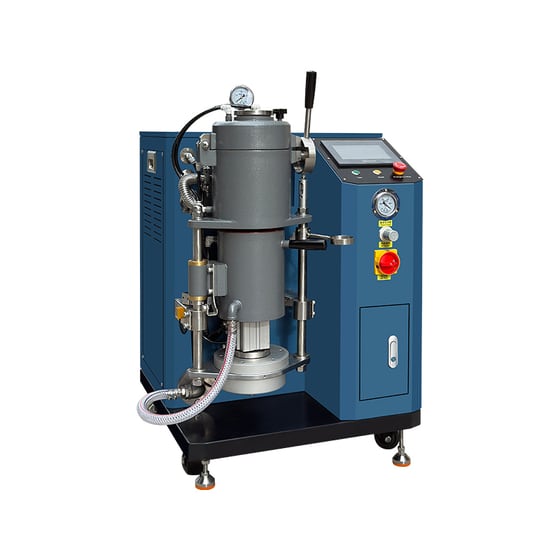
- Casting: Your gold, already tested and weighed, is melted in a vacuum furnace, and a centrifugal casting machine delivers the molten metal smoothly into the mould. Casting under vacuum reduces oxidation and produces denser castings with a higher yield.
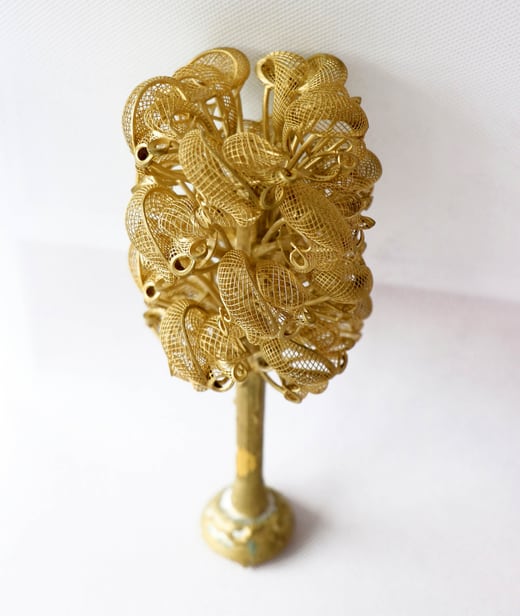
- Breaking out: Once the flask has cooled, high-pressure water washes away the investment to reveal the complete gold tree, which is then cleaned of remaining investment and surface oxide to give the rough castings.
- Finishing: Cutting off the sprues, filing, polishing, plating and so on.
What to prepare before casting
To keep your order moving and the specifications right, please have the following ready:
- Reference: A physical sample, drawing, rubber mould or wax model. Drawings should show dimensions and tolerances; samples should be as complete and detailed as possible, because the clearer the detail, the better the result.
- Your gold: Remove gemstones and any non-precious metal parts first, and keep gold of different purities separate so that it isn't melted together.
- Specification list: Quantity, size range, weight and purity for each design.
- Lead time: When we confirm the plan, we'll give you a realistic delivery date based on complexity, quantity and our schedule.
Leftover gold and loss, accounted for separately
How the gold is accounted for matters most to our clients, so we keep leftover gold and loss strictly separate and check every figure with you in person.
- The sprues and gates are cast as part of the gold tree. Once cut off, they are leftover gold you can reuse, with the same material and purity, and they don't count as loss. You can decide in advance what happens to them: returned with your finished pieces, kept as credit against your next order, or handled another way we agree on.
- Actual loss comes only from trace impurities burning off during melting and tiny amounts of metal left in the crucible and on tools, which is normal physical loss in the trade. The loss rate is agreed before work begins and written on your order.
For how loss is calculated, see How Is Gold Processing Loss Calculated?
FAQ
Is there a minimum order?
There's no fixed minimum; it depends on the complexity and specification of the design. Bear in mind that one-off or small orders carry the up-front cost of making the rubber mould, so the cost per piece is higher. We'll break down the costs in our quote so you can decide.
Can I bring my own rubber mould or wax model?
Yes. A usable mould or wax model lets us skip the model-making and mould-making stages, which shortens production and removes those charges.
Does casting change the purity of the gold?
Gold of a single purity cast on its own comes out at essentially the same purity. If gold of different purities is melted together, the result falls somewhere in between, which is why we ask you to separate your gold by purity.
Get a casting quote
Kam Yuen Gold is in Hung Hom, Hong Kong, and handles jewellery casting, gold powder, wire drawing and ingot casting for customer-supplied gold. Your gold and the finished pieces are weighed in front of you, and the processing fee and agreed loss are set out before work begins. To find out roughly how much loss to expect, message us on WhatsApp with the weight and purity of your gold and the process you have in mind.