

Old jewellery, scrap and production offcuts come in all shapes and sizes, which makes them awkward to store and weigh. Kam Yuen Gold turns irregular gold into standardised material: gold powder, gold grain or ingots. Only the form changes, never the purity, and everything is done in front of you with transparent accounting.
Powder, grain or ingot? Choose by use
- Gold powder or grain: Uniform particles that weigh out precisely with no cutting. Ideal for karat gold alloying, casting in batches and making solder, wherever you need to measure out exact amounts. It also melts quickly, which speeds up production.
- Standard ingots: Neat and easy to store and transport. Ideal for consolidating scrap, holding gold as a store of value, moving gold as a single piece and larger-scale reprocessing. Size and markings can be made to order.
How it works
- Testing and registration: Purity is tested in front of you with an XRF analyser, and the gold is weighed on precision scales and registered.
- Plan and quote: Specification, quantity, processing fee and process loss are agreed and set out in writing.
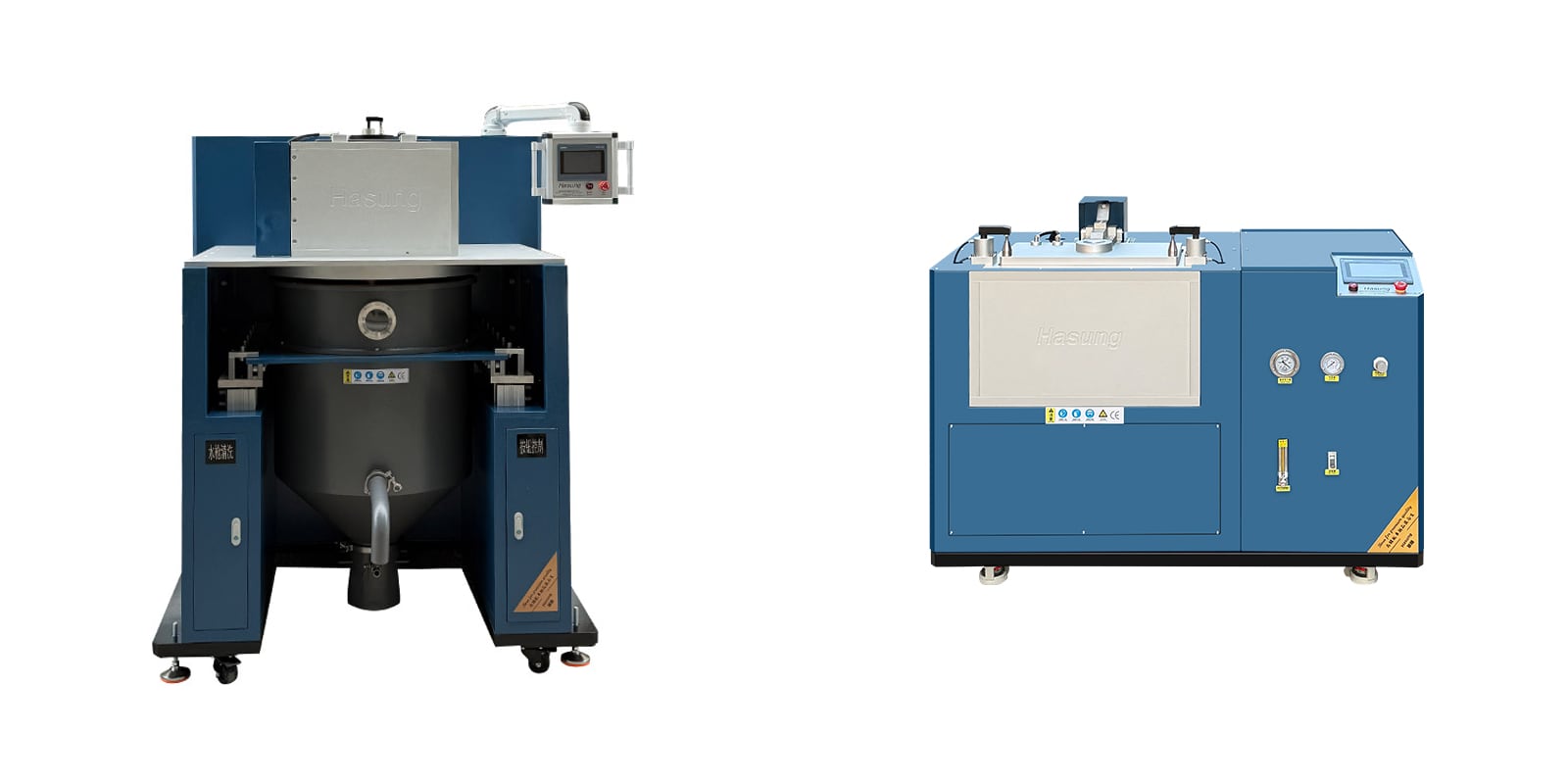
- Melting and forming: The gold is melted under precise temperature control and the slag is removed. It is then cast into ingots using a mould or ingot casting machine, or turned into powder or grain with powder-making equipment.
- Final check and handover: The finished product is cleaned, re-tested and weighed, then checked with you against the formula "incoming gold = finished product + leftover gold + agreed loss" before handover.
Three things to know about purity
- Melting doesn't raise purity: It's a purely physical change. The alloying metals in your gold don't disappear when it melts, so the result has the same purity as what you brought in.
- Mixing purities lowers the result: Melt gold of different purities together and you get the weighted average. For example, 30 g of 999 gold melted with 10 g of 18K gold comes out at roughly 93.7%. We recommend processing each purity separately.
- Higher purity needs refining: Melting can't purify gold. To turn karat gold into 999 or 9999 fine gold, you need a separate refining process, so ask us about it.
Process loss
Loss comes mainly from surface dirt burning off, oxidation of low-melting-point metals, traces left in the crucible, and splashing. Clean fine gold loses little; old or mixed scrap loses more. Loss rates are agreed in writing before work starts and checked with you on delivery. For details, see How Is Gold Processing Loss Calculated?
FAQ
Can I melt gold myself?
We wouldn't recommend it. Gold melts at around 1,064°C. Without professional equipment the temperature is hard to control, it's risky, and you're more likely to contaminate the gold and lose more of it.
Can you process a small amount of scrap?
Yes, there's no fixed minimum weight. With small amounts, the processing fee makes up a larger share of the value; we'll tell you up front so you can decide.
How long does it take?
It depends on the amount and specification. Standard orders are quick, while large batches and custom orders take a little longer. We'll confirm the timing when you approve the plan.
Get a processing quote
Kam Yuen Gold is in Hung Hom, Hong Kong, and handles jewellery casting, gold powder, wire drawing and ingot casting for customer-supplied gold. Your gold and the finished pieces are weighed in front of you, and the processing fee and agreed loss are set out before work begins. To find out roughly how much loss to expect, message us on WhatsApp with the weight and purity of your gold and the process you have in mind.